

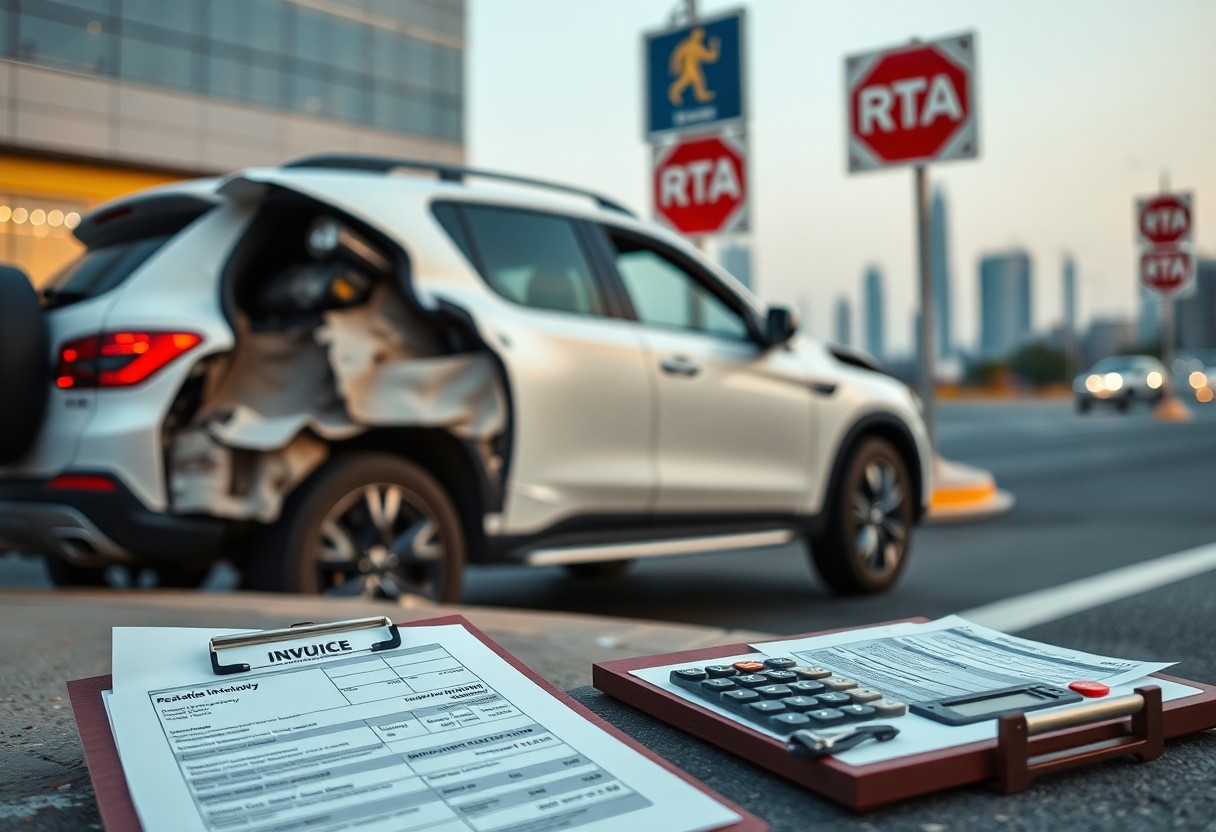
It’s crucial that you carry comprehensive motor insurance in the UAE because soaring repair and replacement costs, harsher regulatory penalties and increasing road congestion now expose your savings to substantial financial risk, while full coverage delivers legal compliance and reliable financial protection that preserves your assets and mobility.
Key Takeaways:
- Rapid growth in the UAE vehicle fleet and rising accident rates raise aggregate claims and pressure public services.
- Higher repair and medical costs-driven by advanced vehicle technology and inflation-make comprehensive cover a practical hedge against large outlays.
- Regulatory trends and government incentives are encouraging broader coverage to reduce uninsured losses and protect consumers.
- Comprehensive insurance shields households and lenders from major financial shocks, lowering the risk of defaults and fiscal exposure.
- Wider uptake improves risk pooling and insurer solvency, stabilizing premiums and reducing the likelihood of state intervention after major loss events.

The Importance of Comprehensive Motor Insurance in the UAE
With many vehicles in the UAE valued at AED 100,000+ and repair costs for modern imports often reaching tens of thousands, you face meaningful financial exposure after accidents or theft. Comprehensive cover not only pays for third‑party liabilities but also compensates for your own vehicle damage, theft, fire, and related legal costs; in practice that means you avoid one-off bills that can exceed a year’s salary or erase resale equity, making comprehensive insurance a practical financial shield.
Understanding Comprehensive Coverage
Comprehensive policies combine third‑party liability with protection for your own vehicle, covering collision damage, theft, fire, windscreen repair, and personal accident benefits; you can add options like zero depreciation and roadside assistance. For example, a zero‑depreciation add‑on may raise premiums by around 10-25% but can save you several thousand dirhams on a major claim for newer cars, while agency repair cover ensures OEM parts and preserves resale value.
Legal Requirements and Compliance
UAE regulations require at least third‑party liability to register and renew a vehicle, and if you finance or lease your car your lender will almost always mandate comprehensive cover for the loan term to protect its collateral; failing to comply can block renewal and expose you to direct claims from injured parties or banks recovering losses.
Authorities and insurers run electronic insurance checks at renewal and during traffic stops, so if your policy lapses you risk registration suspension, fines or impoundment, and insurers commonly deny claims for incidents occurring during uninsured periods. Commercial fleets face stricter minimum limits and higher scrutiny, and if you cause a loss while uninsured you can be personally pursued for vehicle repairs, medical bills, and legal costs that quickly exceed AED 50,000 in severe cases.
Economic Factors Driving Demand
You face rising exposure as macro trends-rising vehicle ownership, supply‑chain shocks and persistent inflation-push repair costs and claim severity higher, forcing insurers to price risk more aggressively and nudging you toward comprehensive motor insurance to avoid coverage gaps.
- comprehensive motor insurance
- UAE
- vehicle ownership rates
- inflation
- cost of repairs
- supply chain
Rising Vehicle Ownership Rates
You now share roads with over 3 million registered vehicles nationwide; in some emirates registrations grew by roughly 8-12% during the post‑pandemic rebound, increasing accident exposure and claim frequency, which directly raises premiums and makes broader coverage more sensible for protecting your assets.
Inflation and the Cost of Repairs
You see parts and labour price pressure: global supply disruptions and currency shifts have driven some component costs up by up to 30%, while specialist parts for premium and electric models cost significantly more, translating into higher claim payouts and steeper premiums for your policy.
The combined effect of higher part prices, longer lead times and rising shop rates means you may face longer repairs, increased total‑loss declarations and higher deductibles; insurers are responding by tightening underwriting, raising reserves and encouraging you to choose policies that cover parts shortages and higher replacement costs.
The Risks of Inadequate Coverage
Insufficient protection exposes you to tens of thousands of dirhams in unexpected costs: repair bills, medical expenses, and lost income if your vehicle is unusable. You may face long claims disputes when exclusions apply, and being underinsured can leave you personally liable for third‑party damages. In practical terms, that means months of financial strain, higher future premiums, and the risk that a single severe incident wipes out an emergency fund.
Financial Consequences of Accidents
After an accident you can expect immediate outlays for towing and repairs, while hospital bills and rehabilitation can accumulate rapidly-often into the tens of thousands of dirhams for serious injuries. You also confront potential legal costs if third parties are hurt or property is damaged, plus lost earnings during recovery. If your policy limits are low or you lack comprehensive cover, you personally absorb these liabilities and face higher premiums or policy refusals on renewal.
The Impact of Natural Disasters
Floods and sandstorms in the UAE inflict concentrated damage: water ingress ruins electronics and engines, while sand abrades bodywork and clogs intake systems. Flood repairs and electrical replacements can easily exceed AED 10,000-20,000, and basic third‑party policies often exclude such perils. If you haven’t secured flood and storm cover, you may be left paying replacement costs and long downtime without a rented vehicle.
Beyond immediate repair bills, natural events create lingering issues that inflate your total loss: saltwater corrosion after coastal flooding accelerates electrical failures, sand‑ingested engines suffer reduced lifespan, and insurers may classify some damage as wear rather than an insured peril. You should factor in rental or alternative transport costs, potential salvage valuation reductions, and the higher probability of claim disputes-so selecting a comprehensive policy with explicit flood and storm endorsements mitigates both short‑term expenses and long‑term depreciation.
Comparison of Insurance Options
| Aspect | What it means for you |
|---|---|
| Coverage scope | You get comprehensive protection for collision, theft, fire and vandalism versus third-party limited to liability. |
| Cost | Expect premiums for comprehensive to be roughly 20-60% higher, depending on car value and driver profile. |
| Excess/deductible | You can adjust deductible levels on comprehensive policies to lower premiums but raise out-of-pocket risk. |
| Claims & repair | Comprehensive often covers approved garages and total-loss settlements; third-party leaves you exposed to repair costs after liability limits. |
Comprehensive vs. Third-Party Insurance
You’ll pay higher premiums for comprehensive cover yet gain repair, theft and fire protection, while third-party protects only against liability costs; if your car is older and valued under AED 30,000 you may accept the savings, but for newer vehicles the financial shelter matters. Perceiving these trade-offs lets you align cover with vehicle value, driving history and your capacity to absorb sudden repair bills.
- Comprehensive
- Third-Party
- Premium
- Deductible
| Feature | Typical UAE example |
|---|---|
| Price differential | Third-party AED 1,200-2,500 vs comprehensive AED 2,500-6,000 annually for many drivers. |
| Repair coverage | Comprehensive covers collision repairs and glass; third-party does not unless claimed against a liable third party. |
| Theft & fire | Included in comprehensive; absent under standard third-party policies unless added as an endorsement. |
| Best for | Choose comprehensive for vehicles above AED 50,000 or high-risk urban driving; third-party suits low-value cars or minimal budgets. |
Cost-Benefit Analysis of Coverage Types
You should weigh average premium differences (often AED 1,000-3,500 extra per year for comprehensive) against the probability of a significant loss; data suggest accident rates around 8-12% annually for mid-range drivers in urban UAE, so expected annualized loss can justify higher premiums for higher-value cars. Perceiving the break-even horizon-commonly 3-5 years for cars over AED 60,000-helps you make a rational choice.
- Premium
- Expected loss
- Break-even
- Claim frequency
| Metric | UAE example |
|---|---|
| Annual premium gap | Typical extra for comprehensive: AED 1,000-3,500 depending on car and driver. |
| Average major claim | Collision repair or total loss often AED 20,000-60,000 for mid-range cars. |
| Claim probability | Mid-range drivers: 8-12% annual claim likelihood; high-risk profiles higher. |
| Break-even example | If you pay AED 2,500 extra yearly, a single AED 30,000 loss within 3-4 years makes comprehensive cost-effective. |
You can model scenarios: assume AED 2,500 additional annual premium and a 10% claim probability, which implies an expected annualized benefit of AED 3,000 on a AED 30,000 claim; apply this to your car’s value and driving frequency to choose. Perceiving these inputs lets you justify the premium as insurance or opt for minimal cover if you can self-insure.
- Premium
- Expected benefit
- Self-insure
- Claim model
| Analysis item | Practical figure |
|---|---|
| Extra annual cost | AED 1,000-3,500 for comprehensive over third-party for typical drivers. |
| Typical claim severity | AED 15,000-50,000 for serious collisions in the UAE. |
| Payback window | 3-5 years for higher-value cars when factoring accident likelihood. |
| Decision rule | If your vehicle value exceeds AED 60,000 or you drive frequently in dense traffic, comprehensive usually wins. |
The Role of Technology in Motor Insurance
You see insurers using AI for underwriting, predictive analytics to price risk per trip, and blockchain pilots for instant claims settlement; industry studies report 15-25% improvements in fraud detection after ML adoption. Automation now handles renewals and document checks, with e-policy issuance cutting turnaround from days to hours. Telematics feeds and image-recognition for damage assessment let you get settlements faster while enabling insurers to offer usage-based discounts up to 30% for safer driving patterns.
Advances in Policy Management
You benefit from AI-driven underwriting that ingests telematics, credit and repair-cost data to tailor premiums in near real time. OCR and RPA eliminate manual entry, with automation reducing administrative tasks by over 50% in many deployments. Smart contracts on distributed ledgers are being trialed to trigger payments automatically after verified claim events, cutting reconciliation time from days to minutes and lowering opportunities for staged fraud.
The Future of Telemetry and Driver Behavior Monitoring
You’ll be tracked by sensors measuring speed, time-of-day, harsh braking, acceleration and cornering; insurers correlate those metrics with loss severity to price risk per-mile. OBD-II dongles and OEM-connected car data deliver higher fidelity than smartphone-only solutions, enabling pay-how-you-drive discounts up to 30% for consistent safe behavior while flagging harsh braking and high-speed events as increased risk.
In practice, fleet operators use geofencing and route analytics to cut fuel and claim exposure, and insurers integrate automatic crash notification to shorten emergency response by several minutes, which can be lifesaving. You must also navigate data privacy and consent frameworks-proper anonymization and retention policies are required to avoid regulatory fines and customer distrust while unlocking telematics’ full value.
Summing up
With this in mind, you should see that comprehensive motor insurance in the UAE is becoming a fiscal imperative because escalating repair and medical costs, higher vehicle values, stricter regulations, and growing traffic exposure concentrate financial risk on you; comprehensive cover spreads that risk across insurers, protects your assets and cash flow, and ensures compliance and continuity amid economic uncertainty.
FAQ
Q: Why is comprehensive motor insurance being framed as a fiscal imperative in the UAE?
A: Comprehensive motor insurance shifts the financial burden of road accidents from public budgets and victims to pooled private funding. As accident severity, repair complexity and medical costs rise, uninsured losses create fiscal pressure through emergency care, legal processes and social welfare. Widespread coverage stabilizes claim costs across many policyholders, reduces ad hoc public spending, and enables insurers to manage risks through pricing, reserves and reinsurance rather than relying on government intervention.
Q: How do rising vehicle repair and medical costs make comprehensive cover economically necessary?
A: Modern vehicles contain advanced electronics and materials that raise repair bills; at the same time, healthcare inflation increases emergency and long-term care expenses after collisions. Without comprehensive policies, individuals often seek public medical services or pursue protracted litigation, creating indirect costs for state systems and courts. Comprehensive policies ensure prompt payment to suppliers and providers, limit downstream public expenditures, and give households predictable exposure through premiums instead of unpredictable catastrophic bills.
Q: What regulatory or market changes in the UAE accelerate the need for comprehensive policies?
A: Financial institutions increasingly require full insurance as a loan condition, and regulators are tightening solvency and consumer-protection standards, encouraging broader coverage and clearer claims processes. Growth of high-value fleets for e-commerce and ride-hailing expands systemic exposure, prompting policymakers to promote risk transfer to the insurance sector. Enhanced enforcement of traffic laws and faster claims processing mechanisms also make comprehensive products more practical and enforceable, aligning private risk allocation with public policy goals.
Q: How does comprehensive insurance benefit fleet operators, businesses and the wider economy?
A: For fleets, comprehensive cover protects assets, reduces downtime through faster repairs and cashless settlements, and stabilizes operating costs by converting unpredictable losses into manageable premium payments. This predictability supports pricing, investment and employment decisions across logistics, delivery and passenger-transport sectors. By minimizing uninsured losses and litigation, comprehensive cover improves overall market efficiency and reduces the need for taxpayer-supported remedies after large-scale incidents.
Q: What policy features and consumer measures make comprehensive motor insurance both effective and affordable in the UAE?
A: Effective design includes risk-based pricing, telematics and usage-based discounts to reward safer driving, modular add-ons for higher-value risks like glass and electronics, and transparent excess structures to discourage small claims. Subsidies or graduated premium assistance can target low-income groups while mandatory minimum standards prevent under-insurance. Strong anti-fraud measures, streamlined digital claims and competition among insurers further reduce costs and keep premiums aligned with actual risk, improving uptake and fiscal outcomes.

0 Comments