

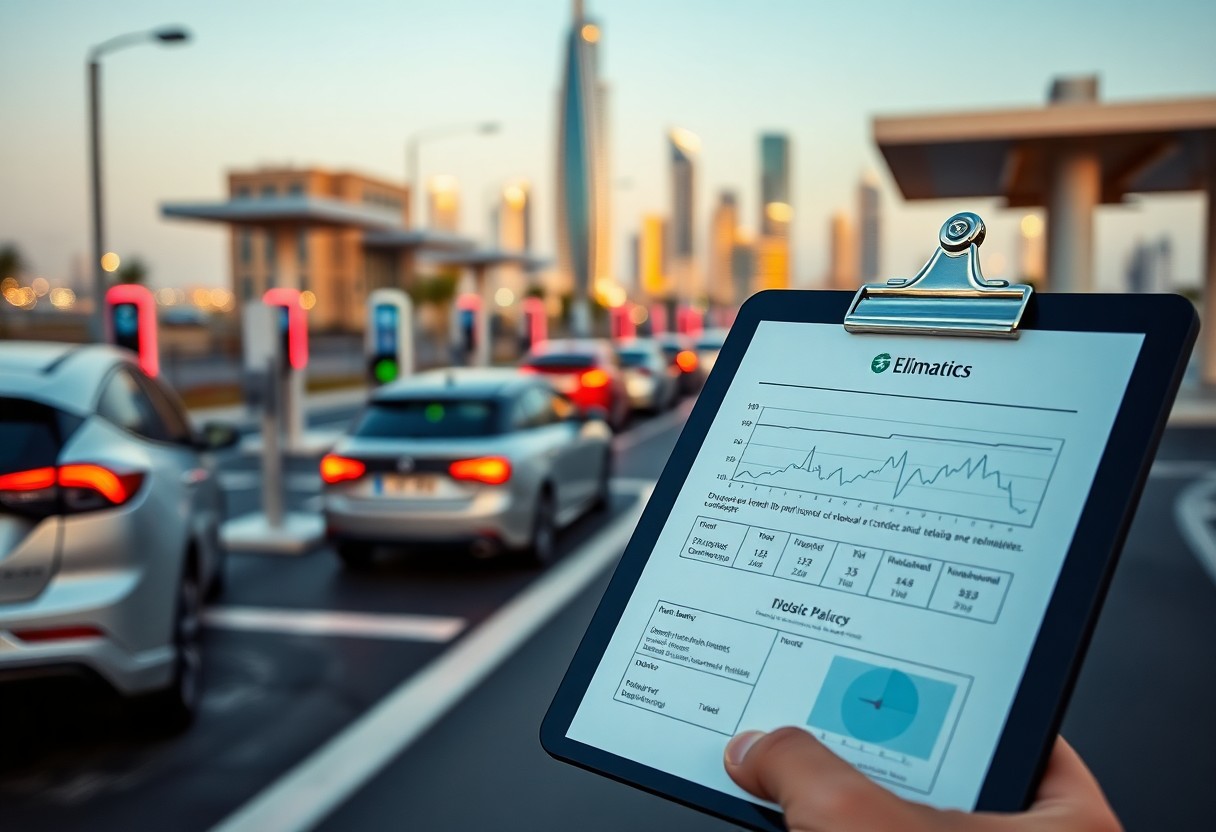
With the UAE’s shift to electric and shared vehicles, you face changing premiums, new coverage needs and data-driven underwriting as insurers adapt; your policy may now hinge on telematics, battery-fire risks and cybersecurity exposure, while regulators and insurers introduce incentives and pay-per-use options that can lower costs; the most significant opportunities include reduced emissions and long-term savings, but the greatest dangers are malfunction liabilities and gaps in traditional liability frameworks, forcing a rapid evolution in motor insurance models you rely on.
Key Takeaways:
- EVs and micromobility alter risk profiles – higher battery and repair costs, new failure modes, and temperature-related battery degradation relevant to the UAE climate.
- Pricing and underwriting are evolving toward telematics and usage-based models to reflect charging behavior, mileage, and shared-mobility usage patterns.
- Insurers are adding tailored coverages (battery replacement, charger/charging-station liability, cybersecurity, and hire-and-share protection) to address new exposures.
- Strategic partnerships with OEMs, energy/charging providers, fleet operators and regulators enable data sharing, bundled services and warranty-driven claims handling.
- Regulatory incentives and national decarbonization targets are accelerating product innovation, premium incentives, and mandatory adjustments for fleet electrification in the UAE.
Understanding Eco-Friendly Mobility
Definition and Importance
Eco‑friendly mobility covers electric and hydrogen vehicles, shared services and micromobility; when you switch to these options you directly reduce tailpipe CO2 and urban NOx. National commitments like the UAE’s Net Zero by 2050 drive policy and infrastructure investment. Technological shifts-notably falling battery costs-make uptake realistic, while insurers and fleets must factor in new liabilities such as battery replacement and high‑voltage repair when setting your premiums.
Current Trends in Eco-Friendly Transportation
Global EV sales exceeded 10% of new car sales by 2022, supported by an ~89% drop in battery pack prices (2010-2020), accelerating electrification. In the UAE you’ve seen ride‑hail pilots from Careem and Uber, hundreds of public chargers rolled out by DEWA and private operators, and expanding e‑scooter schemes in urban districts. Insurers are responding with usage‑based policies, EV‑specific products and fleet telematics as subscription and shared models grow.
Battery pack trends push many vehicle segments toward TCO parity by the mid‑2020s, prompting faster fleet conversion, yet you must account for battery degradation, replacement costs and evolving salvage values. Dubai pilots show lower per‑km energy costs, but charging gaps and grid impacts remain. Meanwhile, second‑life battery markets and recycling facilities are emerging, and insurers’ increased reliance on telematics raises issues around data privacy and cybersecurity in your coverage.
Overview of Motor Insurance Models in the UAE
You encounter a mix of models: mandatory third‑party liability for all vehicles, widely purchased comprehensive policies covering collision, theft and fire, plus emerging usage‑based options-telematics, pay‑per‑mile and behaviour‑based discounts. Legacy annual underwriting still dominates for private and fleet covers, while insurers are piloting EV-specific endorsements, OEM cashless repair networks and aftermarket telematics to price risk more dynamically and manage rising repair and parts costs.
Traditional Motor Insurance Framework
Underwriting still leans on static risk pools: your premium is driven by vehicle value, age, engine size, driver history and NCD tiers that typically reduce premiums by up to around 50%. Claims follow annual renewal cycles, repairs use approved garages and excess structures, and fraud screening is largely manual-so you often see slow settlements and conservative pricing that don’t reflect short‑term changes in your driving behaviour.
Key Players in the UAE Insurance Market
You’ll find national incumbents such as ADNIC and Dubai Insurance operating alongside multinationals like AXA Gulf, RSA and Oman Insurance; takaful operators address Sharia‑compliant demand. Market competition centers on pricing, service networks and digital onboarding, with brokers and bancassurance channels still moving significant volumes of motor business.
Digging deeper, local insurers focus on large fleet relationships with corporates and government fleets, while multinationals target retail sales and telematics pilots. Takaful firms offer alternative retakaful structures, brokers aggregate risk for SMEs, and many players now partner with dealer groups and OEMs for certified, cashless repairs-so your choice of insurer affects claims speed, parts quality and the availability of EV or telematics discounts.
Impact of Eco-Friendly Mobility on Motor Insurance
As electrified vehicles gain traction, your insurance landscape shifts: claim frequency changes while average claim severity often rises because of battery and high-voltage electronics. Insurers are reweighting premiums based on charging access, telematics-derived driving behaviour, and specialist repair availability; in the UAE, expanding public chargers (DEWA and private operators) are already changing roadside assistance needs. You’ll see more usage-based pricing, tailored commercial fleet rates for electrified vehicles, and focused underwriting on software and cyber risks alongside traditional crash exposure.
Shifts in Risk Assessment
Underwriting now treats batteries, power electronics and software as primary loss drivers rather than combustion engines, so you face different exposures: battery damage or thermal-runaway events can inflate severity even if overall accident frequency falls. Insurers are incorporating telematics and OTA-update histories into risk scoring, isolating high-risk behaviours for dynamic premiums, while fleets and ride-hailing EVs push aggregate-exposure modelling and spatial risk mapping around charger density.
Policy Adaptations for Electric and Hybrid Vehicles
Insurers are adding EV-specific modules-battery capacity loss cover, high-voltage system diagnostics, and roadside mobile charging or safe-tow services-so you no longer rely on generic motor policies. Many carriers reward homes with dedicated chargers or vehicles enrolled in telematics with discounts, while specialist repair network clauses and software-update liabilities appear in policy wording to address higher repair complexity and cyberattack risk.
Digging deeper, policies now commonly reference manufacturer battery warranties (often around 8 years/≈160,000 km) to limit insurer exposure, and you’ll encounter explicit clauses for battery replacement caps, gradation based on remaining battery capacity, and coverage for thermal-runaway remediation. Insurers increasingly partner with certified EV workshops, charging networks for on-scene charging/towing, and telematics vendors to verify driving data; that means your premium and claims outcome depend on charger installation, software patch records, and whether your repair goes to an EV-trained facility.
Regulatory Changes Influencing Insurance Models
You’re seeing regulators translate national targets like the UAE’s Net Zero by 2050 and Dubai’s Clean Energy Strategy (targeting 75% clean power by 2050) into insurance expectations: mandatory third‑party frameworks stay, while regulators push for telematics, EV-specific underwriting, and reporting standards so you and insurers can price risk tied to battery safety, charger access and grid reliability.
Government Initiatives and Incentives
You’ll notice incentives such as infrastructure funding, parking and toll exemptions in several emirates, and procurement programs that shift government fleets to electric, all of which lower fleet operating costs and change loss profiles; for example, the federal Net Zero pledge and emirate-level charging rollouts directly reduce range‑anxiety claims and create opportunities for lower EV premiums where charging density rises.
Future Regulations Enhancing Eco-Friendly Practices
You should expect regulators to mandate standardized EV risk codes, require insurers to report EV claims data, and encourage pay‑how‑you‑drive telematics pilots-moves that let you access usage-based discounts while forcing insurers to adapt pricing, reserves and repair-network standards for battery and high-voltage repairs.
More specifically, you may see rules requiring insurers to cover battery degradation, certify EV repair shops, and disclose fleet emissions; industry studies suggest telematics can cut accident frequency by around 20-30%, so regulators are likely to link such data to premium discounts, solvency requirements and mandatory post‑accident battery safety protocols that materially alter underwriting and claims workflows for your EV policies.

Challenges Faced by Insurers in Adapting to Eco-Friendly Trends
Consumer Awareness and Acceptance
You encounter persistent barriers as drivers weigh EV benefits against unfamiliar risks: around 45% of potential buyers cite range anxiety and charging access as primary deterrents, while fleet managers demand total-cost-of-ownership proof before switching. Insurers responding with tailored products-such as battery-cover add-ons and pay-as-you-drive discounts of up to 30% in pilot programs-still need scalable education campaigns and transparent claims examples to move mainstream adoption.
Data Availability and Risk Profiling
Insurers struggle because proprietary OEM data and limited historical EV claims make actuarial models less reliable; global EV market share (~14% of new car sales in 2023) is growing faster than usable loss datasets. You therefore rely on telematics, charging-operator logs and third-party benchmarks, with evidence that telemetry reduces claims by ~20%, but data gaps on battery degradation and software-driven fault modes remain a major modeling blind spot.
To bridge that blind spot you must combine approaches: negotiate data-sharing agreements with OEMs and charging networks, deploy roadside and insurer-owned telematics, and apply transfer-learning from ICE and mature EV markets. Practical tactics include creating synthetic claims using component-level failure rates, stress-testing portfolios for battery-replacement scenarios, and using Bayesian priors to widen confidence intervals where sample sizes are small. Examples from European pilots show partnering with OEMs and fleet operators cuts exposure uncertainty by more than half, so strategic data partnerships and advanced analytics become your fastest route to accurate risk pricing.
Case Studies on Innovative Insurance Solutions
You can see several UAE pilots and rollouts that show how usage-based insurance and EV-tailored policies are reshaping risk pools. Insurers used telematics and behavior scoring to cut fraud and claims costs, while offering premium discounts to low-mileage and EV drivers. Data from pilots suggest measurable shifts in underwriting, claims frequency and customer retention as you evaluate adoption paths.
- 1) ADNIC pilot (2023): telematics on 3,200 vehicles yielded a 18% reduction in at-fault claims and an average 12% premium uplift for safe drivers over 12 months.
- 2) AXA Gulf usage-based rollout (2022-24): 7,500 enrolled vehicles; pay-per-mile discounts averaged AED 420 per policy annually for low-mileage users.
- 3) Takaful Emarat EV product (2024): bespoke EV cover for 1,100 cars with a 20-30% lower mechanical failure claim rate versus ICE equivalents in first year.
- 4) Emirates Insurance fleet telematics (pilot 2023): 250 commercial vans; fuel-efficient driving reduced incident-related costs by 15% and total loss frequency by 9%.
- 5) Insurer A (UAE fintech tie-up) (2024): bundled telematics + app-based rewards for 5,000 users produced a 25% increase in retention and 11% fewer small claims.
Leading Insurers’ Initiatives
You should note that major carriers are shifting capital into data platforms: ADNIC and AXA Gulf expanded telematics underwriting, while others launched dedicated EV insurance teams to price battery risk and charger liability, with typical pilot discounts ranging from 10-30% depending on behavior and vehicle type.
Initiative vs Impact
| Initiative | Impact / Data |
|---|---|
| Telematics underwriting | 18% fewer at-fault claims (ADNIC pilot); 12% avg premium uplift for safe drivers |
| Pay-per-mile | AED 420 avg annual savings for low-mileage policyholders (AXA Gulf data) |
| EV-specific cover | 20-30% lower mechanical failure claims first year; tailored battery coverage |
| Fleet analytics | 15% reduced incident costs; 9% lower total loss frequency (commercial vans) |
Comparative Analysis with Global Trends
You can compare UAE pilots to global rollouts: usage-based insurance penetration remains lower locally but mirrors the same drivers-telematics, EV growth and regulatory nudges-with global new-EV sales near 14% (2023), while UAE fleet EV share is still in the low single digits.
You should expect faster convergence as insurers import global models: telematics adoption in mature markets reaches 20-30% of policies, while UAE pilots show 2-5% early penetration, indicating a gap but clear trajectory toward parity within 3-5 years if incentives and charging infrastructure scale.
UAE vs Global Metrics
| Metric | UAE (Recent) |
|---|---|
| EV share (fleet) | ~2% of registered vehicles (2024 estimate) |
| Global new-EV sales | ~14% of new-car sales (2023) |
| Usage-based insurance penetration | UAE pilots: 2-5% of policies; Global mature markets: 20-30% |
| Average pilot claim reductions | 15-20% fewer incidents in UAE telematics pilots; aligns with global telematics results |
To wrap up
Hence you are witnessing how eco-friendly mobility compels UAE motor insurers to redesign underwriting, risk models and pricing for electric and shared vehicles; insurers deploy telematics, battery-specific cover, usage-based premiums and green discounts while regulators push incentives and standardisation, so your policy choices and costs will evolve with vehicle technology and infrastructure; expect more tailored products, clearer EV liability rules and opportunities to reduce premiums by demonstrating sustainable driving.
FAQ
Q: How is the rise of electric and hybrid vehicles changing motor insurance models in the UAE?
A: The growth of eco‑friendly vehicles is forcing insurers to redesign underwriting, pricing and product features. Underwriting must account for high-cost battery packs, specialized repair networks and different risk profiles for electric drivetrains. Pricing models are incorporating vehicle software and connectivity risks, while products add new covers such as battery replacement, EV charging liability and extended warranty integrations. Insurers are also segmenting offers between private owners, ride‑hailing fleets and corporate fleets to reflect varying usage patterns and operational exposures.
Q: Will EV ownership lead to lower or higher insurance premiums for drivers in the UAE?
A: Premiums depend on a balance of factors: lower mechanical complexity and potentially safer driver behavior can reduce some claims, but battery replacement, thermal events and higher parts costs can increase claim severity. In urban fleet contexts (taxi, delivery), lower running costs and telematics‑enabled safe driving discounts may lead to lower effective premiums. For private owners, discounts tied to usage, charging behavior and vehicle security systems are increasingly common, but high replacement costs for batteries and bodywork using OEM parts can keep premiums elevated unless mitigated by insurer partnerships or government incentives.
Q: What new coverages or policy features are appearing specifically for eco‑friendly mobility?
A: New coverages include battery health and replacement protection, charging station liability (covering incidents at public/private chargers), software and cybersecurity liability, and specialized roadside assistance for EVs. Policies increasingly offer OEM‑approved repair guarantees, battery degradation riders, and integrated telematics bundles for pay‑how‑you‑drive or pay‑per‑mile plans. Insurers are also offering multi‑product bundles that combine motor cover with home charging equipment warranties and fleet energy management services.
Q: How are data, telematics and connected‑vehicle technologies influencing underwriting and claims management?
A: Telematics and connected‑vehicle data enable real‑time risk profiling, dynamic pricing and more accurate accident reconstruction. Usage‑based insurance (UBI) models and behavior‑based discounts rely on telematics to reward lower mileage and safer driving. Connected data speeds up claims handling through automated crash alerts and diagnostics, and supports predictive maintenance offers. Insurers must address data privacy, integration with OEM systems and the limited historical EV claims data when calibrating actuarial models.
Q: What are the main challenges and business opportunities for UAE insurers as eco‑friendly mobility expands?
A: Challenges include limited historical loss data for EVs, higher repair and battery replacement costs, the need to develop specialist repair networks, and emerging liabilities tied to software and charging infrastructure. Opportunities include designing differentiated green products, capturing new revenue streams from fleet electrification and mobility services, forming partnerships with OEMs and charging providers, and leveraging telematics to reduce loss frequency. Regulatory support and government incentives for clean mobility can accelerate adoption and make green insurance propositions commercially attractive.


0 Comments