


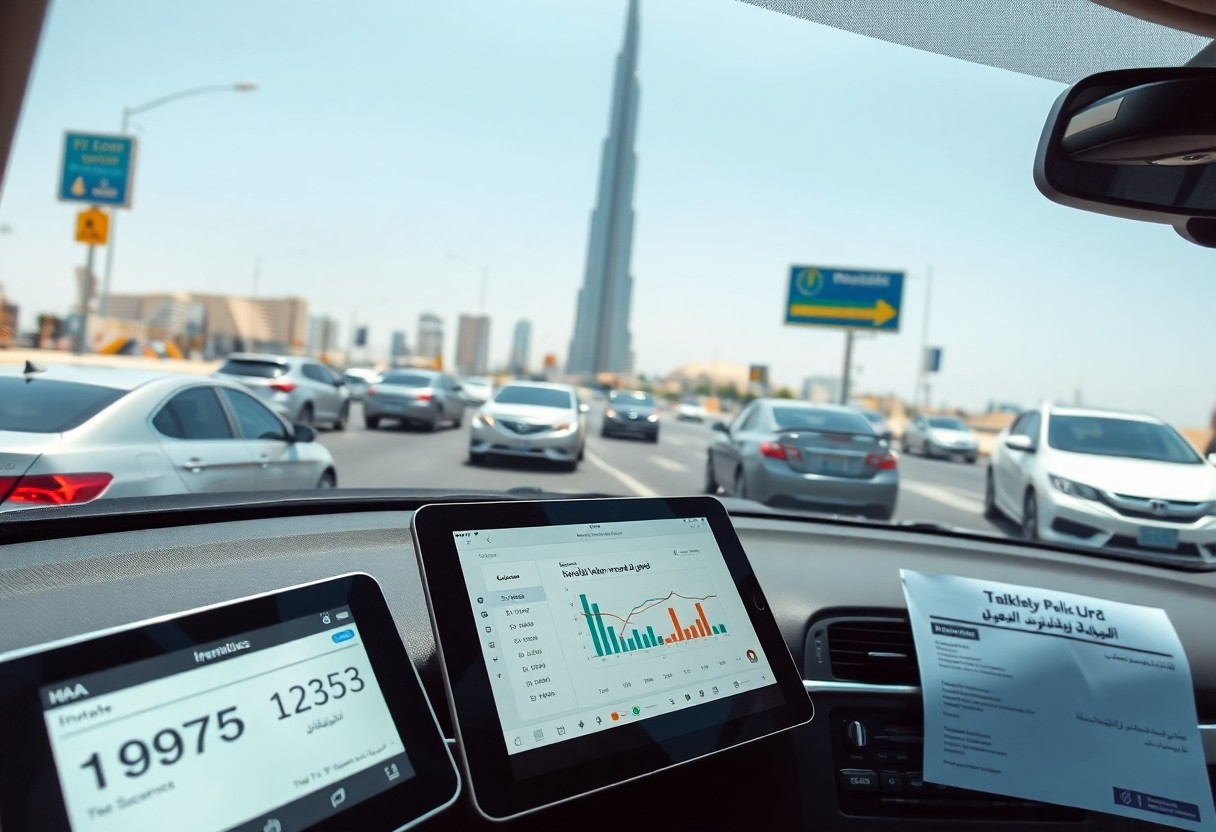
You will see AI recalibrate risk assessment in UAE motor insurance by using telematics, real-time driving data and predictive analytics to create more accurate risk profiles, enable lower premiums for safer drivers and accelerate fraud detection-while also introducing privacy and algorithmic bias risks that you and your insurer must manage.
Key Takeaways:
- AI fuses telematics, vehicle sensors, traffic and weather data to produce granular, time‑varying risk profiles that enable dynamic underwriting and real‑time pricing.
- Predictive models identify patterns and forecast accident likelihood, improving loss forecasting, reserves and targeted risk‑mitigation programs.
- Anomaly detection and NLP accelerate claims intake, automate document/image analysis and surface fraud, cutting cycle times and loss leakage.
- Behavior‑based and usage‑based products (pay‑per‑mile, driver scoring, personalized discounts) allow fine‑grained segmentation across the UAE’s diverse driver population.
- Effective rollout depends on robust data governance, model explainability, bias monitoring and alignment with UAE privacy and insurance regulations to maintain trust and compliance.
Overview of Motor Insurance in the UAE
You operate in a market where third‑party liability is mandatory and comprehensive cover is the norm for expatriate and high‑value vehicle owners; policies typically add roadside assistance, windscreen cover and personal accident benefits. Claims are dominated by collisions, theft and weather‑related damage, and insurers underwrite portfolios measured in millions of policies across the emirates, so underwriting decisions hinge on vehicle age, driver history and concentrated exposure in Dubai and Abu Dhabi.
Current Risk Assessment Practices
You still rely heavily on traditional actuarial models built from historical claims, vehicle age, driver age and no‑claims discounts (often up to 50% for long‑active drivers). Underwriting workflows use manual inspections, repair shop estimates and centralized premium tariffs; telematics and UBI pilots exist but remain at a single‑digit percent penetration, so pricing mostly reflects past loss patterns rather than real‑time behaviour.
Challenges Facing Traditional Models
You face fragmented data flows between insurers, traffic authorities and repair networks that create data silos, while rapid growth in app‑based fleets and delivery vehicles changes exposure profiles faster than rate manuals can adapt. Fraud, overstated repair invoices and a visible pool of uninsured drivers raise loss ratios, and legacy models struggle to capture micro‑location and behavioural risk that now drive frequency and severity.
Digging deeper, you confront slow regulatory filings, inconsistent claims coding and limited access to telematics or smartphone sensor data, so pricing lags actual risk. Operationally, claims leakage from inflated invoices and duplicate submissions can account for an estimated 10-15% of costs in similar markets; meanwhile, the absence of high‑resolution geospatial risk mapping and near‑real‑time driving behaviour metrics prevents insurers from segmenting risk granularly and offering differentiated premiums or incentives.
Understanding AI Algorithms
AI algorithms blend supervised, unsupervised and reinforcement techniques to refine risk scores from millions of telematics points, CCTV images and claims histories. You see insurers deploying convolutional nets for damage assessment and gradient-boosted trees for scoring, enabling real-time underwriting and pricing adjustments within seconds. Pilot programs report premium recalibrations of roughly 10-20%, while also exposing bias and privacy risks when models proxy for sensitive demographics.
Machine Learning in Risk Assessment
Supervised models use past claims as labels while unsupervised methods detect anomalies; you would typically choose XGBoost or LightGBM for tabular risk features and CNNs for image/video evidence. Telematics-derived metrics-hard brakes per 100 km, night-driving share, and average speed-offer high predictive value, and regional pilots indicate telematics programs can reduce claim frequency by about 15-25%. Continuous monitoring is required to manage model drift and maintain performance.
Data Analytics and Predictive Modelling
By fusing DMV records, telematics, weather and traffic feeds, predictive models produce spatio-temporal risk heatmaps that forecast claim probability over 7-30 day horizons; ensemble approaches often reach AUCs above 0.85 in operational tests. You can translate these outputs into dynamic premiums by route or time, but strong data governance and anonymization are needed to satisfy UAE regulatory expectations.
Feature engineering makes the difference: you should build rolling 30/90-day risk metrics, derive geospatial clusters from GPS traces, and add external layers like hourly sandstorm and rainfall indices-trials combining weather with telematics report accuracy gains near 10-12%. Temporal architectures (LSTM, survival analysis) model time-to-claim, and adherence to the UAE’s PDPL and regulator guidance prevents misuse of sensitive attributes while preserving model utility.
Applications of AI in Motor Insurance
AI is reshaping underwriting, claims and customer engagement, and you can see tangible ROI in pilots across the GCC: 30-40% faster claim settlements and 20-30% uplift in fraud detection in some deployments. Models combine telematics, CCTV and public datasets to create real-time risk signals; you should expect hybrid pipelines-computer vision for damage, NLP for reports, and tabular ML for pricing-to work together to reduce loss ratios and speed customer outcomes.
Claims Assessment and Fraud Detection
You can automate damage appraisal using mobile images and dashcam footage, where computer-vision models classify parts damaged and estimate repair costs within minutes. NLP extracts inconsistencies from adjuster notes and police reports, while anomaly detection flags suspicious patterns across claims histories. In pilots, these systems have reduced manual review loads by over 50%, cutting exposure to staged-collision and inflated-repair schemes that drive losses.
Risk Pricing and Customer Segmentation
By ingesting telematics (speed, harsh braking, trip time), vehicle telemetry, and external data like traffic density and weather, you can create dynamic, personalised premiums and micro-segments; pilots often reprice safe-driver cohorts by 10-25% lower premiums. Unsupervised clustering reveals latent risk groups-commuters vs. occasional drivers-allowing targeted products and retention offers while mitigating cross-subsidies in pooled rates.
In practice, you should engineer features such as acceleration events per 1,000 km, night-mile percentage, and trip variance, then test gradient-boosted trees or ensembled neural nets for predictive lift. Explainability tools (SHAP, LIME) help you demonstrate why a driver’s score changed, and A/B tests quantify impact on loss ratios-pilots frequently report a 5-15% reduction in loss ratio. Remain vigilant for data bias and ensure human-in-the-loop review for edge cases.

Impacts of AI on Consumer Behavior
Enhanced Customer Experience
By using telematics and AI-driven portals, insurers can offer personalized pricing and targeted cover options that make your renewal decisions faster and clearer. You could receive automated quotes or policy upgrades via app, and some programs report claims settled in under 24 hours through automated damage assessment. With features like route-based pricing and proactive maintenance alerts, insurers can reduce friction while offering discounts up to 30% for demonstrably safer driving in pilot schemes.
Shifts in Risk Perception
When your driving is scored in real time, you often start to view certain trips, routes or times of day as higher risk and adjust behavior-choosing different routes, limiting night driving, or fitment of ADAS. Such visible scoring can lower your subjective risk, encouraging safer choices, but it also introduces privacy trade-offs as you weigh data sharing against lower premiums.
Further detail shows that behavioral nudges from scoreboards and driver feedback can produce measurable changes: some pilots saw participants reduce harsh braking events and speeding instances by a noticeable margin within weeks. You may respond by buying additional safety tech, shifting from comprehensive to usage-based cover for occasional drivers, or opting into family-linked policies that redistribute risk. Those moves change market demand and push insurers to redesign products around real-time, measurable behavior.
Regulatory Considerations
As you deploy AI-driven underwriting, align models with the UAE’s data-protection and supervisory expectations; see ECI Leverages AI to Transform Risk & Underwriting as a local example. Regulators will expect audit trails, explainability and documented bias-testing, so you should keep versioned model logs, performance metrics and governance records ready for inspection.
Compliance with UAE Insurance Laws
You must ensure your AI respects the PDPL (Federal Decree-Law No. 45 of 2021) and local insurance reporting and conduct rules; implement automated validation, maintain model-change registers, and produce monthly performance dashboards so your teams can evidence solvency, underwriting consistency and consumer-protection adherence during audits.
Ethical Implications of AI Usage
You should mitigate bias and fairness risks proactively: run pre-deployment fairness tests, mandate annual independent algorithmic audits, and block proxy variables that correlate with nationality or income; failure to do so risks mispriced premiums, discrimination claims and reputational damage in a market reliant on insurer trust.
Operationally, deploy explainability tools like SHAP or LIME, provide counterfactual explanations for adverse decisions, use synthetic datasets to stress-test edge cases, require human review for high-cost claims, and document consent and opt-out options so you can demonstrate technical due diligence and respect for policyholder rights.
Future Trends in AI and Motor Insurance
With AI moving from pilots to production, you’ll see predictive telematics, computer-vision claims triage and behavioral risk scoring become standard. Industry analysts expect usage-based insurance to climb from under 5% in the GCC to near 25-30% by 2030 in advanced segments. Regulators in the UAE are already drafting data governance rules, so your operational models must incorporate privacy-preserving techniques and explainability from the outset.
Innovations on the Horizon
Edge AI inside vehicles, federated learning and V2X feeds will let you score risk in real time; pilots report up to 40% faster fraud detection and 50% shorter settlement times when onboard sensors are integrated. Expect synthetic data and multimodal models (camera, telematics, weather) to reduce labeling costs and extend coverage to rare events like sandstorm collisions, while blockchain prototypes streamline claims auditing.
Long-term Implications for the Insurance Market
As you adopt continuous underwriting, expect pricing to become more granular and competition to shift toward data-rich players; analysts foresee operational cost reductions of 20-40% for AI-first carriers and potential market consolidation as incumbents acquire insurtechs. Be aware that algorithmic bias and cyber risk could create regulatory blowback, so governance, model validation and capital models will need redesigning.
If adoption scales, your reserves and reinsurance purchasing will change because claim frequency distributions become more volatile yet more measurable; one UAE pilot linked telematics to a 15% drop in at-fault claims, prompting reinsurers to offer tailored treaties. You’ll need continuous monitoring pipelines, explainable scoring for regulators, and incident response plans because a single data breach could erase customer trust overnight.
To wrap up
With this in mind, AI algorithms enable you to refine risk models using telematics, weather and traffic data, and driver behavior, producing personalized premiums, dynamic underwriting and earlier fraud detection. You gain faster claims decisions, proactive loss prevention alerts, and better capital allocation while regulators and actuaries can monitor model fairness and compliance. As a result, your pricing becomes more granular, responsive and predictive, lowering overall exposure and incentivizing safer driving across the UAE motor fleet.
FAQ
Q: How will AI algorithms change the way risk is assessed in UAE motor insurance?
A: AI shifts assessment from coarse, population-level factors to continuous, individualized risk profiles by ingesting behavioral, telematics and contextual data to produce real-time risk scores. That enables dynamic pricing, targeted interventions (driver coaching, preventive maintenance) and more granular reserve setting. Insurers can move from static rating tables to models that adjust premiums based on current driving patterns, route risk, time-of-day exposure and evolving environmental factors, improving risk segmentation and capital efficiency.
Q: What new data sources will AI use and how do they improve model accuracy?
A: Models will combine in-vehicle telematics (speed, braking, acceleration), ADAS and sensor logs, mobile GPS/telemetry, traffic and weather feeds, geospatial risk maps, repair-shop and parts-supply metrics, and historical claims and social-economic indicators. Fusion of structured and unstructured data (images, video, telematics streams) improves signal-to-noise for loss causation, enables causal feature extraction (e.g., harsh-braking frequency), and reduces reliance on proxy variables like age or postcode, yielding more precise risk estimates.
Q: How will AI affect fraud detection and claims handling in the UAE market?
A: AI enhances fraud detection via pattern recognition and anomaly detection across claims histories, app-submitted photos/videos, telematics traces and third-party data. Computer vision automates damage assessment and triangulates scene consistency; linkage analysis uncovers organized fraud rings. Automation speeds triage and settlement for low-risk claims, reallocating human adjusters to complex cases, reducing cycle times and loss adjustment expenses while improving claimant experience.
Q: What regulatory, privacy and ethical constraints must insurers consider when deploying AI in the UAE?
A: Insurers must align with UAE data protection requirements, obtain lawful consent for personal and telematics data, document data minimization and retention policies, and ensure secure cross-border transfers. Regulators and stakeholders expect model explainability, audit trails, mitigation of algorithmic bias, and fair treatment across demographic groups. Ongoing compliance includes model validation, impact assessments, governance frameworks and transparent customer disclosures about automated decision-making.
Q: What practical steps should UAE insurers take to implement AI-driven risk assessment successfully?
A: Start with targeted pilots that pair well-defined business outcomes and clean data sources, establish strong data governance and labeling processes, and build multidisciplinary teams (actuarial, data science, underwriting, legal). Invest in model validation, explainability tools and secure MLOps pipelines; engage regulators early and run bias and adversarial testing. Scale gradually, integrate telematics and customer opt-in programs, and redesign pricing and claims workflows to capture operational benefits while managing change and customer communications.


0 Comments